
Table of Contents
- Assess Your Counter Space and Kitchen Workflow
- How to Declutter Kitchen Countertops in Three Phases
- Vertical Storage Solutions for Small Kitchens
- Best Kitchen Counter Organizers and Storage Containers
- Create Ergonomic Zones for Prep, Coffee, and Cooking
- Budget-Friendly DIY Hacks and Rental-Friendly Solutions
- Maintain Your Organized Kitchen Counters
- Conclusion
Last Updated: August 29, 2026
Assess Your Counter Space and Kitchen Workflow
Before organizing, understand your actual kitchen layout and movement patterns. Walk through your kitchen at different times and note where you naturally reach and stand. Small kitchens demand ruthless prioritization, every inch must earn its place through daily use.
Start by measuring each counter section's length and depth. Note obstacles: outlets, backsplash height, windows, appliances. This foundation prevents buying organizers that won't fit or solutions that block access.
Identify your kitchen's natural zones: prep (cutting board, knives), cooking (stove, pans), beverage (coffee maker, mugs), and serving. In small kitchens these zones overlap, but recognizing them helps you group related items and create logical flow.
How to Declutter Kitchen Countertops in Three Phases
Breaking decluttering into three phases prevents emotional decisions and keeps you from creating new messes while solving old ones.
Phase 1: Remove Everything and Sort by Zone
Empty your counters completely and wipe them down. As you remove items, sort them by zone: beverages, cooking, prep, serving, and miscellaneous. This reveals patterns, you might discover three spatulas or four coffee mugs that are candidates for removal.
Phase 2: Decide What Stays and What Goes
For each item, ask: Do I use this weekly? Does it need to live on the counter? Is there a better home for it? Items that fail any question should go. Your daily coffee maker stays. Your collection of decorative gadgets does not. A cluttered counter creates daily friction; a clean one makes your kitchen feel bigger and cooking easier.
Phase 3: Assign Each Item a Home
Every item needs a designated spot, not just a general area. This specificity prevents counter creep where items gradually accumulate. When everything has a clear home, putting things back takes seconds.
Vertical Storage Solutions for Small Kitchens
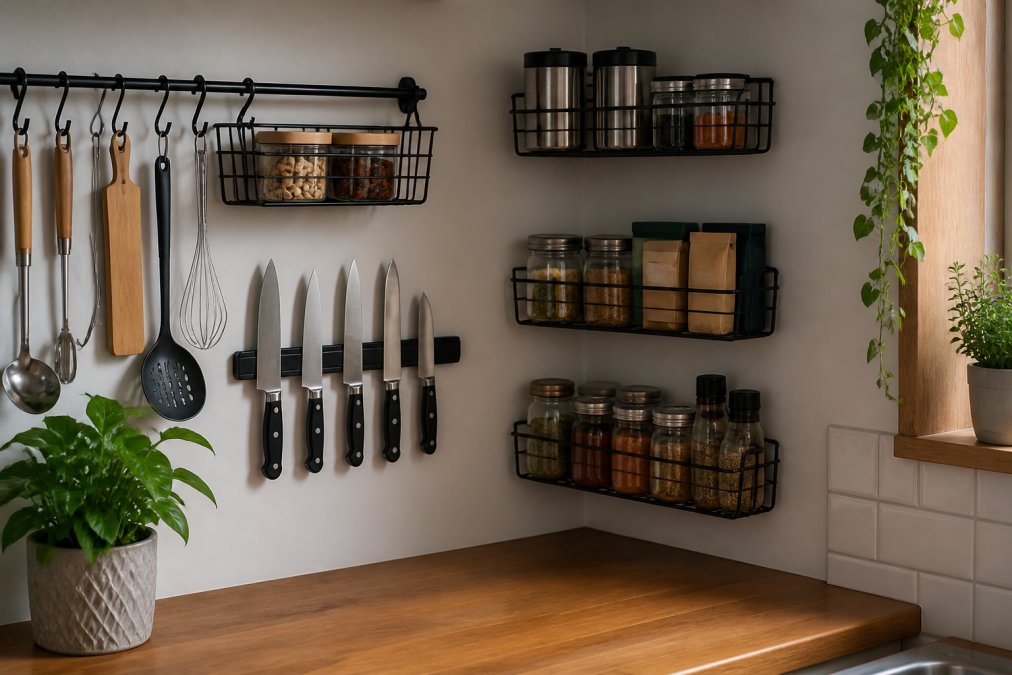
When counter space is limited, go vertical. Wall-mounted organizers transform wasted wall space into functional storage.
Wall-Mounted Storage and No-Drill Options
The Handy Wall Storage Organizer from Johnny Kash & Carry Co. ($21.99) mounts in seconds with adhesive backing or hooks, no drilling required. It's perfect for hanging kitchen towels, utensil holders, or small baskets that would crowd your counter.

Adhesive-backed organizers work best for lightweight items: tea towels, measuring spoons, or small herb bundles. If you're willing to drill, wall shelves offer better vertical storage. A single 24-inch shelf above your prep zone can hold your cutting board, frequently used knives, and cooking oils, three items off your counter.
Magnetic strips mounted near your stove or prep zone store knives and metal utensils with minimal depth, critical in small kitchens.
Under-Cabinet and Open Shelving Strategies
The Smart Glow Under Cabinet Lights from Johnny Kash & Carry Co. ($18.99) are motion-activated and USB-rechargeable, requiring no wiring. They mount magnetically under cabinets and provide task lighting without counter clutter.

Use under-cabinet space for hanging mugs, storing small baskets, or mounting a narrow spice rack. A hanging mug rack frees up shelf space and keeps your most-used mugs accessible.
Open shelving works if you're intentional: only items that look good and get used regularly. Floating shelves above your counter create visual interest while keeping items accessible. Keep them sparse, floating shelves should feel intentional, not crowded.
Best Kitchen Counter Organizers and Storage Containers
The right containers corral items and create visual order in limited space.
Drawer Dividers and Trays for Daily Essentials
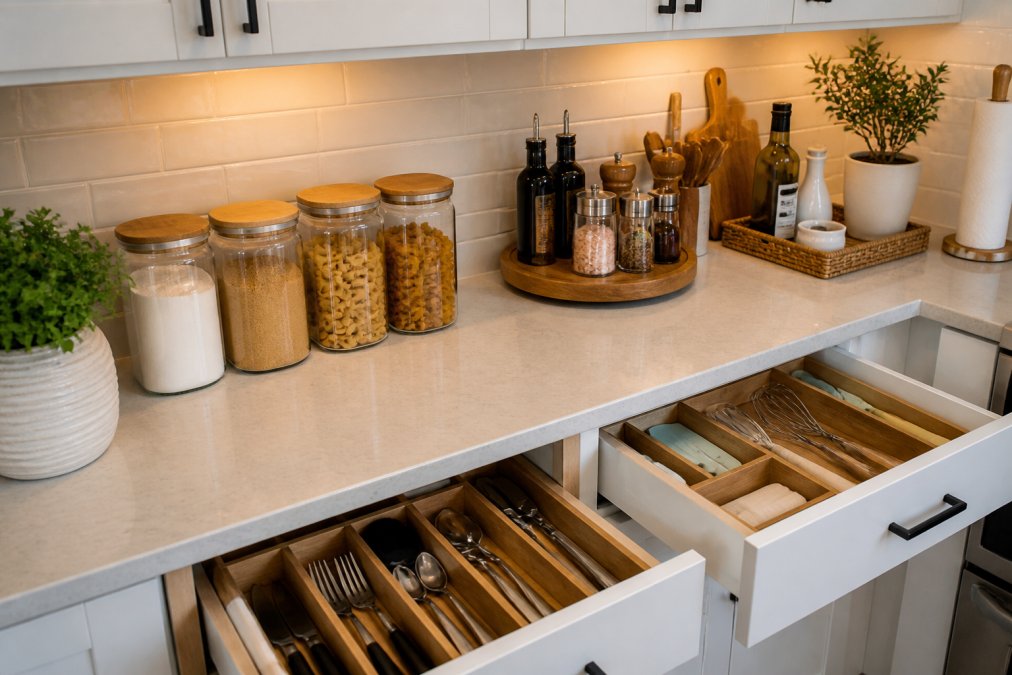
Drawer dividers prevent items from migrating to counters. A divided utensil drawer keeps forks, knives, and spoons separate. Trays group related items, coffee supplies, cooking oils, or tea accessories, into one visual unit, taking up less perceived space.
Stackable trays maximize vertical space within drawers and cabinets, doubling storage capacity in small kitchens.
Canisters, Lazy Susans, and Turntables
Canisters store dry goods while creating visual calm. Instead of five boxes of cereal and flour, matching canisters look intentional and organized.
Lazy Susans and turntables maximize usable depth. A turntable in your spice cabinet means accessing everything without moving items. A lazy susan on your counter for coffee supplies rotates items into view as needed. Corner turntables are particularly valuable, a hard-to-reach corner cabinet becomes instantly accessible.
Create Ergonomic Zones for Prep, Coffee, and Cooking
Intentional zone creation improves workflow and visual organization.
Your prep zone should have your cutting board and three most-used knives within arm's reach. Your coffee zone should group coffee maker, filters, beans, mugs, and sweetener together, proximity matters before you've had coffee.
Your cooking zone centers on your stove with cooking utensils, frequently used oils, and salt and pepper within reach. A small utensil holder or magnetic strip keeps tools accessible without cluttering your counter.
Keep your serving zone separate from cooking to reduce chaos during meal prep. Ergonomic workflow means minimal movement and maximum efficiency. If you're constantly reaching across your counter or walking between zones, adjust your layout.
Budget-Friendly DIY Hacks and Rental-Friendly Solutions
Organizing doesn't require expensive systems or permanent installation.
Mason jars are budget-friendly storage for dry goods. Fill them with flour, sugar, pasta, or beans and label them. Clear glass shows when you're running low.
Tension rods inside cabinets create vertical dividers for baking sheets and cutting boards for under $10. Adhesive hooks are the renter's best friend, stick them under cabinets or on walls for hanging utensil holders and dish towels without damage.
Pegboards are modular and affordable ($20-40). Mount one on an empty wall section to hang frequently used items. Repurpose what you have: glass jars become utensil holders, small boxes become drawer dividers, wooden crates become countertop organizers.
The Handy Wall Storage Organizer from Johnny Kash & Carry Co. ($21.99) is a budget-friendly alternative to permanent shelving. It mounts in seconds, costs less than most solutions, and works in any kitchen with no drilling or damage.
Maintain Your Organized Kitchen Counters
Organization is a system you maintain. Without maintenance, counter creep returns within weeks.
The daily reset takes five minutes: return items to their designated homes before bed or first thing in the morning. Weekly, wipe down your counter and check your zones for items migrating or things no longer getting used.
Monthly, reassess your zones. Is your prep zone working or does it need adjustment? Seasonal, do a deeper audit, summer means more fresh produce storage; winter means more baking supplies. Adjust zones to match your actual seasonal needs.
The biggest maintenance principle: resist new items. Every new thing either replaces something or takes space. Before buying a new gadget, ask if it genuinely improves your workflow or just adds visual noise.
Organizing small kitchen counters is about making intentional choices about what deserves your limited space. It's not about buying perfect organizers or following someone else's system, it's about understanding your workflow and creating a layout that supports it.
Johnny Kash & Carry Co. offers tools that make this easier. The Handy Wall Storage Organizer ($21.99) and Smart Glow Under Cabinet Lights ($18.99) are rental-friendly, affordable solutions that work in any small kitchen. Both solve real problems without requiring permanent installation or breaking your budget.
Frequently Asked Questions
What items should I keep on my kitchen counters?
Keep only items you use daily: coffee maker, toaster, cutting board, and utensil holder. Store everything else in cabinets or drawers. This reduces visual noise and countertop clutter. Items like small appliances, spice racks, and cooking tools should be stored vertically or in designated zones to free up surface area for actual food prep.
How do I organize kitchen counters in a rental apartment?
Use no-drill solutions like adhesive wall organizers, magnetic strips, and freestanding shelving units. The Handy Wall Storage Organizer ($21.99) mounts in seconds without damage. Avoid permanent installations. Use drawer dividers, turntables, and stackable containers to maximize existing cabinet space. This approach lets you declutter countertops without losing your security deposit.
What's the fastest way to declutter kitchen countertops?
Set a timer for 15 minutes and remove everything from one section. Sort items into three piles: keep, donate, and relocate. Put keepers back in organized groups using trays or containers. Repeat for the next section. This phased approach prevents overwhelm and creates immediate visual results. Focus on one kitchen zone at a time rather than the entire counter.
How can vertical storage help organize a small kitchen?
Vertical storage moves items off counters and onto walls, freeing up prep space. Install under-cabinet lighting like Smart Glow LED strips ($18.99) to illuminate shelves, use wall-mounted organizers for frequently used tools, and add open shelving above counters. This maximizes your kitchen's vertical space without requiring more floor area, reducing countertop clutter significantly.
This article was written using GrandRanker