
Table of Contents
- Why Online Gadgets Are Discounted: The Core Economics
- Inventory Clearance and Excess Stock Management
- How New Model Releases Drive Discounts on Older Electronics
- Refurbished vs Used Electronics: Understanding the Difference
- Seasonal Sales Events and Limited-Time Bundles
- How to Spot Fake Tech Deals and Avoid Scams
- Best Time of Year to Buy Electronics for Maximum Savings
- The Role of Warehouse Direct Shipping and E-Commerce Overhead
Last Updated: August 12, 2026
Why Online Gadgets Are Discounted: The Core Economics
Online gadgets are discounted because retail economics have fundamentally changed. E-commerce sellers operate with lower cost structures than brick-and-mortar stores, and those savings get passed along. The real reason involves inventory pressure, supply chain efficiency, and fierce competition. When retailers stock too much inventory, they need to move it. When new models launch, older stock becomes obsolete. When e-commerce platforms eliminate physical store overhead, margins shrink but volume increases. All of these forces push prices down.
At Johnny Kash & Carry Co., we've tracked these pricing patterns closely because understanding them helps our customers make smarter purchasing decisions. The discounts you see online aren't accidents or temporary loss leaders. They're the natural result of how modern retail works.
Inventory Clearance and Excess Stock Management
Retailers buy inventory months in advance based on sales forecasts. When those forecasts are wrong, excess stock becomes dead weight on the balance sheet. It occupies warehouse space, ties up capital, and generates no revenue. Holding costs money, space, electricity, labor, insurance, and inventory management systems all add up.
After a few months of carrying unsold inventory, the math becomes clear. A 30% discount that moves the entire stock in two weeks is actually more profitable than holding it at full price for six months. This is why you'll see dramatic markdowns on items that haven't sold through. The retailer isn't losing money on the discount; they're saving money by eliminating carrying costs.
E-commerce platforms have an advantage here. They can move inventory faster than traditional stores because they reach a broader audience instantly. That speed means they can afford smaller margins because volume compensates. They also have lower physical overhead, which means they don't need to hold inventory as long before it becomes a liability.
How New Model Releases Drive Discounts on Older Electronics
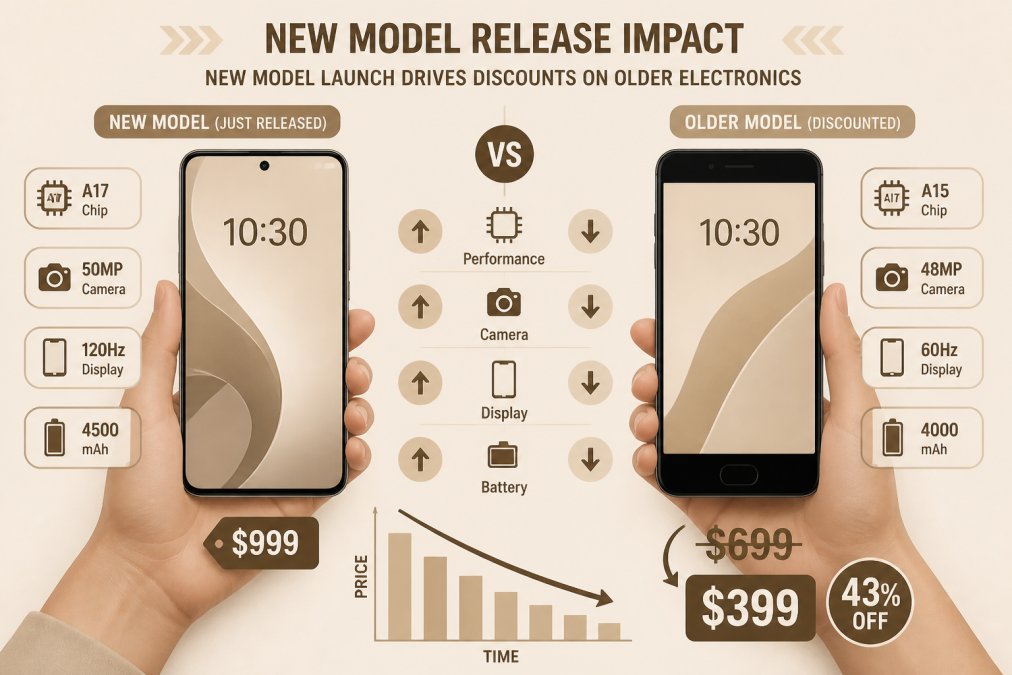
Every year, manufacturers release new versions of popular devices. When the new model arrives, the old one becomes yesterday's technology overnight. Retailers still have shelves full of the previous generation and need to clear it to make room for new inventory.
This creates a predictable discount cycle: the old model gets marked down to move stock before the new one launches, with discounts getting steeper as launch day approaches. A laptop from last year's generation might be 95% as capable as this year's model, but retailers can't sell it at last year's price. So they discount aggressively, sometimes 20-30%, sometimes deeper.
If you buy a gadget two weeks before a new model launches, you'll pay significantly more than if you wait one week. This is why tech enthusiasts often wait for announcement dates to buy the old model at its deepest discount. The lesson is straightforward: if you don't need the absolute latest version, waiting for a new model announcement gives you access to significantly discounted older inventory.
Refurbished vs Used Electronics: Understanding the Difference
Not all discounted electronics are new. Understanding the difference between refurbished and used is critical to making smart purchasing decisions online.
Refurbished electronics have been returned to the manufacturer or retailer, inspected, repaired if necessary, and repackaged for resale. They're typically covered by a warranty (often 90 days to one year) and come with a quality guarantee. Back Market and Best Buy's refurbished outlet specialize in this category, with documented quality checks.
Used electronics are sold as-is, typically by previous owners through platforms like eBay or private sales. They may work perfectly or have hidden issues, with usually no warranty. Condition varies wildly depending on how the previous owner treated the device.
For online shopping, refurbished is generally the safer choice. You get a discount compared to new (often 30-50% off) with some protection. The retailer has verified the product works and will stand behind it. Used products offer deeper discounts but require more due diligence and carry more risk.
Seasonal Sales Events and Limited-Time Bundles
Seasonal sales are predictable: Black Friday, Cyber Monday, back-to-school season, and holiday shopping. These events drive massive traffic spikes, and retailers use aggressive discounting to capture that traffic. Limited-time offers create urgency, a 20% discount for 48 hours triggers action more effectively than a permanent discount.
Retailers also use bundling strategically during seasonal events. A laptop might be discounted 15%, but bundled with a monitor and keyboard, the total discount is 25%. This increases transaction value while making the deal feel more attractive.
Seasonal events align with inventory cycles. Back-to-school season (July-August) clears summer inventory. Holiday season (November-December) is the biggest retail period, so retailers discount aggressively to capture market share. January sales clear holiday overstock. The real bargains sometimes come in the days immediately after major events, when retailers clear remaining inventory.
How to Spot Fake Tech Deals and Avoid Scams

Not every deal online is legitimate. Some retailers use artificially inflated "original prices" to make discounts look deeper than they are. Others sell counterfeit or refurbished products as new.
The first red flag is price. If a deal seems too good to be true, it probably is. Check the price on multiple retailers. If only one site has the deal, investigate why. The second red flag is the retailer itself. Check their return policy. Legitimate retailers like Woot!, Back Market, Best Buy, and Target have clear, customer-friendly return policies. Fly-by-night retailers often have vague return policies or make returns difficult.
Packaging matters. Counterfeit products often have subtle packaging differences, slightly off colors, misspelled words, or poor print quality. Check seller ratings and reviews. On platforms like eBay or Amazon, seller history is public. Look for patterns of complaints about fake products or non-delivery.
Verify the seller's location. Legitimate retailers have verifiable business information. Payment method matters too. Credit cards and PayPal offer buyer protection. Wire transfers and cryptocurrency do not. If a retailer insists on payment methods that can't be reversed, that's a major red flag.
Best Time of Year to Buy Electronics for Maximum Savings
Timing matters significantly for electronics purchases. January and February are excellent for deals as retailers clear holiday overstock. Back-to-school season (July-August) offers strong discounts on laptops, tablets, and accessories. Black Friday and Cyber Monday (late November) are heavily promoted, but prices aren't always deepest, real bargains sometimes come in the week following these events.
Mid-year sales (June-July) can offer good deals, while the worst times are immediately after major product launches and right before major sales events. Tracking price history helps. Websites like CamelCamelCamel (for Amazon) and Honey show historical prices. Check whether the current price is actually a good deal relative to the product's typical price.
One counterintuitive insight: buying refurbished or open-box items outside of major sale events can offer better deals than buying new items during sales. The discount on refurbished items is consistent year-round, while new items fluctuate seasonally.
The Role of Warehouse Direct Shipping and E-Commerce Overhead
E-commerce has fundamentally changed retail economics. Online retailers have lower overhead than brick-and-mortar stores. No rent for retail space. No sales staff. No utilities for storefronts. This cost difference translates directly to pricing power.
A traditional electronics retailer might have 200 stores, each with staff, rent, and utilities. An online retailer might have one warehouse and a website. The cost per transaction is dramatically lower. Warehouse direct shipping is even more efficient, some manufacturers operate their own warehouses and ship directly to customers without going through traditional distribution channels, eliminating middlemen and reducing costs further.
E-commerce retailers can source products more efficiently, buying in bulk directly from manufacturers and negotiating better terms. Shipping costs have become more transparent and competitive, driving efficiency improvements across the supply chain. However, e-commerce overhead isn't zero. Customer service, returns processing, and logistics infrastructure all cost money. What's changed is the ratio, the cost of serving an online customer is lower than serving a physical store customer, even accounting for these factors.
| Retail Model | Primary Overhead | Pricing Impact |
|---|---|---|
| Physical Store | Real estate, staff, utilities | Higher prices to cover overhead |
| E-commerce Warehouse | Logistics, customer service, returns | Lower prices, higher volume |
| Warehouse Direct | Minimal distribution, direct shipping | Lowest prices, limited selection |
| Marketplace (Amazon, eBay) | Platform infrastructure, seller support | Variable, depends on seller |
As retail moves online, overhead decreases and discounts increase. Retailers that operate efficiently online can undercut traditional retailers significantly.
When you're shopping online for gadgets, understanding these economics helps you make smarter decisions. Discounts aren't random, they're the result of inventory pressure, supply chain efficiency, competitive dynamics, and seasonal patterns. The best deals come when you align your purchasing with these underlying forces.
Johnny Kash & Carry Co. specializes in offering trending gadgets at competitive prices precisely because we understand these dynamics. With discounts up to 45% off and fast, tracked shipping on every order, we're positioned to help you access quality products without overpaying. Our secure checkout and easy returns process mean you can shop with confidence, knowing you're getting both the savings and the protection you deserve.
Frequently Asked Questions
Are discounted online gadgets always refurbished?
No. Online gadgets are discounted for many reasons: inventory clearance, seasonal sales, overstock, model obsolescence, and warehouse direct shipping that cuts retail overhead. Some discounts come from refurbished stock, but many reflect legitimate markdown strategies retailers use to move inventory faster. Check the product listing to confirm whether an item is new, refurbished, or open-box before purchasing.
Why are online electronics cheaper than in-store?
Online retailers have lower overhead costs than physical stores. They don't pay for retail space, in-store staff, or utilities for multiple locations. E-commerce companies can pass these savings to customers through lower prices. Additionally, online retailers manage inventory more efficiently and can offer steeper discounts on excess stock without the pressure of maintaining a physical storefront.
How do I know if a tech deal is legitimate or a scam?
Legitimate tech deals come from established retailers like Best Buy, Target, Woot!, and manufacturer outlets. Verify the seller's return policy, warranty terms, and customer reviews before buying. Be skeptical of prices that seem too good to be true (often a sign of counterfeit products or inflated original prices). Check if the retailer is transparent about product condition (new, refurbished, or open-box) and offers secure, encrypted checkout.
What's the best time of year to buy electronics for the lowest prices?
Black Friday and Cyber Monday (November) offer some of the steepest discounts on electronics. Back-to-school season (August) and holiday clearance (January) also provide significant savings. New model releases typically trigger discounts on older versions within weeks. Monitor flash sales on platforms like Woot! and Newegg year-round, as these offer unexpected deals on inventory the retailer needs to clear quickly.
This article was written using GrandRanker