
Table of Contents
- What Tracked Shipping Actually Means for Retail
- Tracked vs. Untracked Shipping: Key Differences
- Benefits of Tracked Shipping for Small Business
- How to Track Packages from Retailers
- USPS Tracking Status Meanings Explained
- Tracking, Insurance, and Liability: What You Need to Know
- Is Tracked Shipping Now the Industry Standard?
- Conclusion
Last Updated: August 18, 2026
What Tracked Shipping Actually Means for Retail
Tracked shipping assigns a unique tracking number to a package, allowing retailers and customers to monitor its journey from warehouse to doorstep with real-time updates at each transit stage.
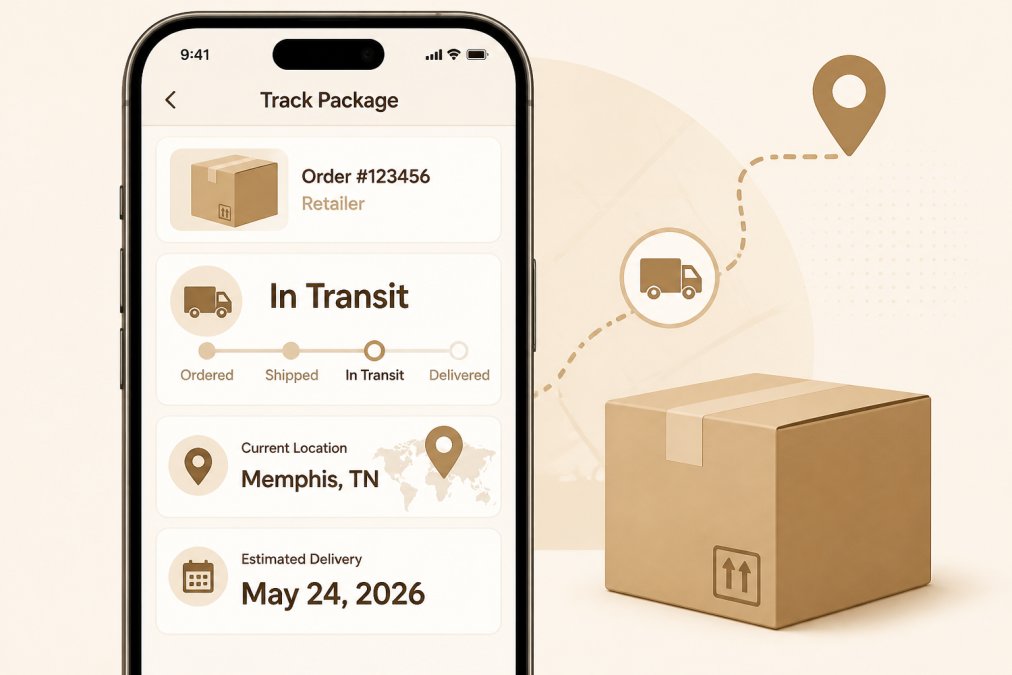
For retailers, tracked shipping has become essential infrastructure. When customers see exactly where their order is and when it will arrive, return rates drop, customer service inquiries decrease, and satisfaction scores climb. The tracking number serves as proof that the shipment exists within the carrier's system, creating accountability throughout the logistics chain.
At Johnny Kash & Carry Co., we've seen firsthand how this transparency transforms the customer experience. Customers who receive tracking information immediately after purchase report higher confidence in their order, even before arrival.
When a package ships, the carrier (USPS, UPS, FedEx, or regional carriers) assigns a tracking number connected to a database that updates whenever the package scans at a distribution facility, loading dock, or delivery vehicle. Customers access these updates through the carrier's website, email notifications, or SMS alerts, creating end-to-end tracking visibility.
Tracked vs. Untracked Shipping: Key Differences
Understanding these differences is crucial for any retailer deciding which shipping method to offer.
How Tracking Numbers and Labels Work
A tracking number is a unique alphanumeric code that ties a specific package to a carrier's logistics network. The number appears on the shipping label, in carrier systems, and on customer notifications. When a package scans at a sorting facility, distribution center, or delivery location, that scan updates the tracking database with timestamp and location data.
The shipping label contains the tracking number, barcode, sender address, recipient address, weight, and service level. Modern carriers use optical scanning technology to read these labels automatically, so label quality directly impacts tracking accuracy.
Untracked shipping provides no scanning data. The customer receives a receipt and postage marking indicating the package entered the mail stream, but no further visibility exists.
Proof of Delivery and Liability Protection
Proof of delivery is a record showing that a package reached its destination address and was handed to a recipient or left at a specified location. This proof typically includes a timestamp, signature (if required), and sometimes a photo of the package at delivery.
Proof of delivery protects both retailer and carrier. If a customer claims they never received an order, the retailer can point to delivery confirmation. If a customer disputes a transaction with their credit card company, the retailer can provide evidence that the package was delivered as promised. This documentation reduces chargeback rates significantly.
Untracked shipments offer no proof of delivery, creating a liability gap that can cost retailers thousands in disputed transactions, refunds, and lost inventory.
| Shipping Method | Tracking Available | Proof of Delivery | Customer Visibility | Liability Protection |
|---|---|---|---|---|
| Tracked (Standard) | Yes, real-time | Yes | Full journey visibility | High |
| Tracked (Signature Required) | Yes, real-time | Yes, with signature | Full journey + recipient confirmation | Very High |
| Untracked | No | No | None | None |
Benefits of Tracked Shipping for Small Business
Small retailers often assume tracked shipping costs too much or adds complexity. In reality, tracked shipping typically saves money by reducing returns, chargebacks, and customer service overhead.
When customers can track packages, they stop emailing asking "Where's my order?" A busy retailer handling fifty orders per day might field ten tracking inquiries without tracking systems. With tracking, that number drops to one or two, saving hundreds of hours annually.
Tracked shipping also reduces return fraud. A customer who receives a package and signs for it has a harder time claiming non-delivery to justify a refund. Retailers using tracked shipping report lower return rates because the documentation creates accountability on both sides.
For small businesses competing against larger retailers, tracked shipping levels the playing field. Customers expect it and it signals that you're a legitimate operation with professional logistics. This is especially important for trend-driven products where customers compare you against established competitors.
Tracked shipping also improves inventory accuracy. When packages scan at distribution facilities, you get real-time data about shipment status, allowing you to identify bottlenecks, predict delays, and proactively communicate with customers.
How to Track Packages from Retailers
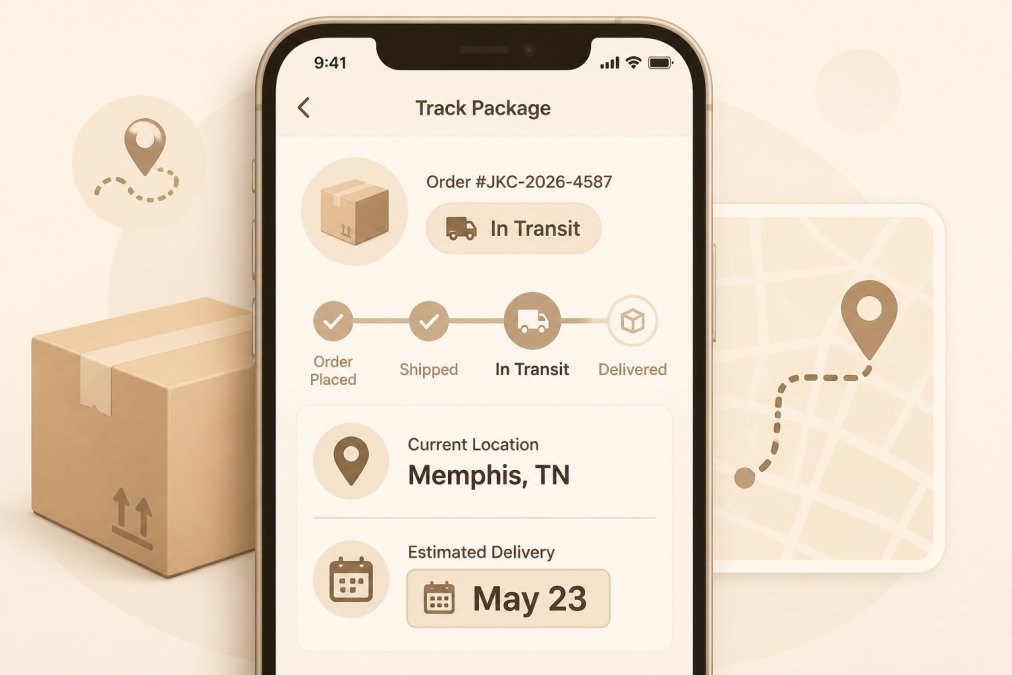
Tracking a package requires only the tracking number and knowledge of which carrier handled the shipment. Most retailers provide this information in a shipping confirmation email immediately after the order ships.
Real-Time Visibility and Delivery Notifications
Once you have the tracking number, visit the carrier's website (USPS.com, UPS.com, FedEx.com, or others) and enter the number in their tracking portal. The system displays the package's current location, last scan time, and estimated delivery date, updating multiple times per day as the package moves through their network.
Modern carriers offer SMS and email notifications. When you provide your phone number or email during checkout, the carrier sends automatic updates at key milestones: package picked up, in transit, out for delivery, and delivered.
Some retailers, including Johnny Kash & Carry Co., integrate tracking data directly into customer accounts. Instead of visiting the carrier's website, customers can log into their account and see tracking status for all orders in one place.
Delivery notifications should arrive within hours of an update. If you don't receive notifications, check your email spam folder or contact the carrier's customer support.
Understanding Delivery Exceptions and Delays
Delivery exceptions are status updates indicating something unexpected has occurred. Common exceptions include weather delays, address issues, or carrier equipment failures. These don't necessarily mean your package is lost; they usually mean the delivery timeline has shifted.
If you see "delivery exception," read the details carefully. An address correction notice means the carrier couldn't find the address as provided. A weather delay means the package is safe but won't arrive on the originally estimated date. A carrier equipment failure means the local facility had a problem but the package will resume movement once resolved.
Some exceptions require customer action. If the carrier couldn't access your delivery location, they may need instructions for future delivery attempts. Contact the carrier's customer support and provide access instructions.
If your package shows no updates for five business days after the last scan, or if it's marked as delivered but you never received it, contact the retailer immediately. They can file a claim with the carrier and initiate an investigation.
USPS Tracking Status Meanings Explained
The United States Postal Service uses specific status language in its tracking system.
"Accepted" means the package has entered the USPS system at the origin facility. "In transit" indicates the package is moving between facilities toward its destination. "Out for delivery" means the package left the local delivery facility and is on a mail carrier's route. "Delivered" confirms the package reached the recipient address.
"Delivery attempted" means the mail carrier tried to deliver but couldn't access the location or the recipient wasn't available. USPS will attempt delivery again the next business day unless the package is marked for signature confirmation.
"Return to sender" indicates the package couldn't be delivered and is heading back to the retailer. This happens when addresses are incorrect, recipients refuse packages, or delivery attempts are exhausted. Contact the retailer immediately to resolve the address issue or arrange reshipment.
Occasionally, packages show no updates for several days. This usually means the package is in a facility between scans and hasn't reached the next scanning point yet. If a package shows no updates for more than a week, contact USPS or the retailer to investigate.
Tracking, Insurance, and Liability: What You Need to Know
Tracked shipping creates a legal record that protects both retailers and customers, but insurance and liability rules are specific and important to understand.
When you purchase a package from a retailer, that retailer is responsible for delivering it in good condition. If the package arrives damaged or goes missing, the retailer bears the liability. However, the retailer's liability depends on whether they purchased shipping insurance and what service level they selected.
Standard tracked shipping typically covers the package value up to a certain amount, often around $100. If you're buying items worth more, ask the retailer whether they've purchased additional insurance. Many retailers, including Johnny Kash & Carry Co., automatically insure packages for their full value as part of their commitment to customer protection.
Signature-required delivery increases liability protection further. When a package requires a signature, the carrier won't leave it unattended, eliminating the "package left on porch and stolen" scenario. For high-value items, signature-required service is worth the small additional cost.
The key takeaway: tracked shipping creates accountability. If something goes wrong, you have documentation to support any dispute.
Is Tracked Shipping Now the Industry Standard?
Tracked shipping has become the default expectation across retail. Most major e-commerce platforms offer it automatically. When a retailer doesn't offer tracking, it raises red flags about legitimacy and professionalism.
The cost difference between tracked and untracked shipping has narrowed significantly. Carriers have optimized their networks to the point where tracking adds minimal overhead. The competitive advantage of offering tracking now outweighs the small cost difference.
For trending products and social-media-driven purchases, tracking is non-negotiable. Customers buying viral gadgets and home essentials want confirmation their order is real and on its way.
Retailers who don't offer tracked shipping lose sales to competitors who do, field more customer service inquiries, and have higher chargeback rates. The economics no longer favor untracked shipping.
Johnny Kash & Carry Co. includes fast, tracked shipping on every order because it's now a baseline expectation, not a premium feature.
When you're shopping for trending gadgets and home essentials, tracked shipping should be your baseline expectation, not a pleasant surprise. It protects you, gives you visibility into your order, and creates accountability throughout the supply chain. Johnny Kash & Carry Co. includes fast, tracked shipping on every order because we believe you deserve to know exactly where your purchase is at all times. With our secure, encrypted checkout and real support available seven days a week, you can shop with confidence that your order is handled professionally from purchase through delivery.
Frequently Asked Questions
What does tracked shipping actually mean, and how is it different from standard shipping?
Tracked shipping gives you a tracking number that lets you monitor your package's journey from the retailer's warehouse to your door. You get real-time updates on parcel status, delivery windows, and proof of delivery. Standard untracked shipping means the carrier accepts your package, but you have no visibility into where it is or when it will arrive. For retail, tracked shipping has become the norm because customers expect to know where their orders are at all times.
Why do customers prioritize tracked shipping for online orders?
Customers value tracked shipping because it reduces anxiety about whether their purchase will actually arrive. Real-time visibility into the parcel journey builds trust in the retailer and carrier. If a delivery exception occurs, customers can see it immediately rather than wondering why their package hasn't shown up. This transparency directly impacts customer satisfaction and repeat purchases, which is why retailers now use tracked shipping as a competitive advantage.
What do USPS tracking status meanings tell you about your package?
USPS tracking updates show your package's location and status at each step. 'In Transit' means your parcel is moving through the logistics network. 'Out for Delivery' indicates your package is on the delivery truck that day. 'Delivered' confirms proof of delivery. 'Delivery Exception' means there's a delay or issue, bad weather, address problems, or signature requirements. Understanding these statuses helps you know exactly where your shipment is and when to expect it.
How does tracked shipping protect retailers and customers if a package gets lost?
Tracked shipping creates a documented shipping history that proves when and where a package was handed off to the carrier. If a parcel goes missing, this tracking data is evidence for filing a claim with the carrier. Package insurance works hand-in-hand with tracking, most carriers require proof of shipment and delivery attempts before honoring claims. Without tracking, retailers and customers have no liability protection and no way to prove the package was actually sent or received.
This article was written using GrandRanker