
Table of Contents
- What Is Fair Market Value Definition and Why It Matters
- How to Check Real Market Value: Step-by-Step Process
- How to Spot Fake Discounts and Inflated Original Prices
- Using Online Price Comparison Tools Effectively
- The Difference Between Estimated Value and Actual Market Value
- Common Mistakes to Avoid When Checking Market Value
- Conclusion
Last Updated: August 23, 2026
What Is Fair Market Value Definition and Why It Matters
Fair market value is the price at which a product would sell between a willing buyer and a willing seller, neither being under pressure to buy or sell and both having reasonable knowledge of relevant facts. Understanding fair market value is your most powerful defense against inflated prices and deceptive discounts.
A product marked down from $199 to $79 sounds compelling until you realize it typically sells for $65 across comparable retailers (the FTC). That "discount" is a manipulation tactic designed to trigger impulse purchases.
At Johnny Kash & Carry Co., we believe transparent pricing starts with understanding what products actually cost in the real market. Our commitment to delivering high-quality products at competitive prices means we price items based on genuine market conditions, not inflated anchor prices. Knowing how to check real market value protects you from wasting money and helps you spot quality differences between retailers.
How to Check Real Market Value: Step-by-Step Process
Checking real market value requires a systematic approach. This process takes 10-15 minutes per item but saves you from bad purchases (the FTC).
Step 1: Gather Product or Property Details
Start by collecting specific information about the product you're evaluating. Write down the exact brand name, model number, color, size, and any other distinguishing features. Check the product's UPC code or ASIN (Amazon Standard Identification Number) if available, as these unique identifiers make it easier to find the exact same product across retailers.
Document the condition: is it new, open-box, refurbished, or used? These details matter because they explain price differences. A product marked as "like new" should cost more than one labeled "acceptable condition."
Step 2: Research Comparable Sales and Listings
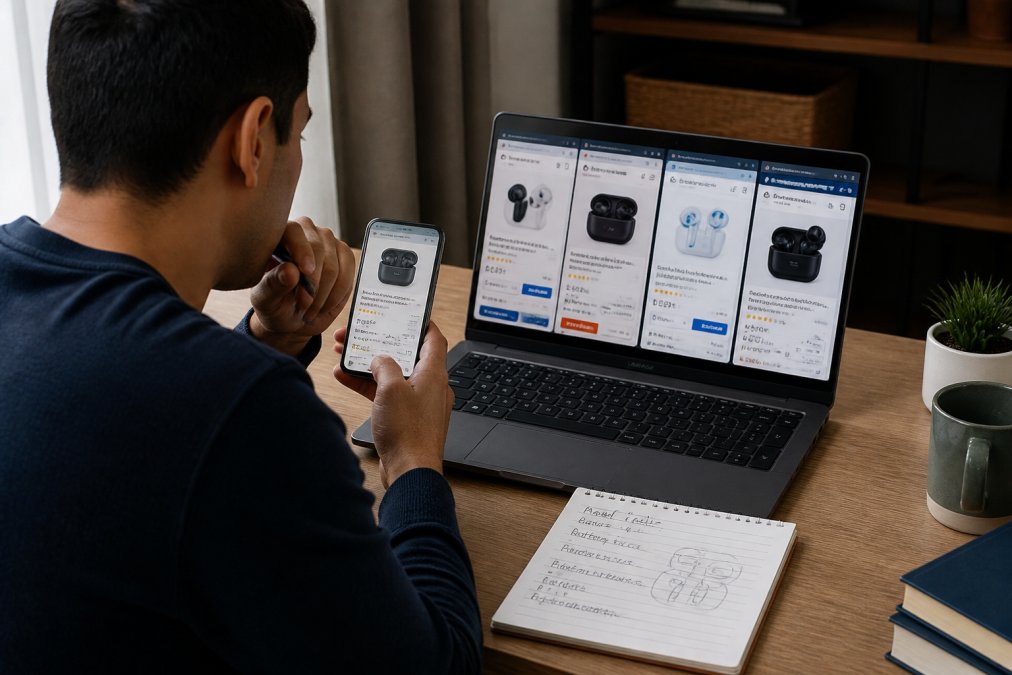
Search for the same product on at least five different retailers, including major marketplaces like Amazon and eBay, specialty retailers, and the brand's official website. Write down the price at each location along with any current promotions.
Look for sold listings, not just active ones. On eBay and similar platforms, sold listings show what buyers actually paid. Check multiple marketplaces over a few days if possible, as prices fluctuate based on inventory and demand.
Pay attention to shipping costs and calculate the total landed cost, what you actually pay when the item arrives. A product priced at $40 with $15 shipping costs more than the same item at $50 with free shipping.
Step 3: Use Online Price Comparison Tools Effectively
Price comparison tools aggregate listings from multiple retailers and help you spot patterns. Tools that track price history show whether an item's current price is typical or inflated. A product that normally costs $60 but is listed at $95 today is not genuinely discounted when marked down to $75.
Filter by condition, shipping speed, and seller ratings. A lower price from an unknown seller carries more risk than a slightly higher price from an established retailer. Check the tool's update frequency, real-time pricing data gives you more accurate information than stale snapshots.
Step 4: Verify Current Market Conditions
Market conditions affect fair market value. A product in high demand during peak season costs more than the same item during off-season. Check inventory levels across retailers, when stock is low everywhere, prices rise. When inventory is abundant, retailers compete more aggressively on price.
Look at when the product was released. New products command higher prices than older models. This isn't a discount issue, it's a product lifecycle issue.
How to Spot Fake Discounts and Inflated Original Prices
Retailers use deceptive pricing tactics so consistently that recognizing them becomes essential. The most common tactic is inflating the original price, then offering a discount that sounds dramatic but still leaves you paying above fair market value.

A fake discount works like this: a retailer sets an original price of $200 for an item that typically sells for $60 elsewhere (the FTC). They then offer a "limited-time discount" of 60% off, bringing it to $80. You're still overpaying by 33% compared to fair market value.
Watch for "original price" claims that differ wildly from what you find on other sites. Beware of "limited-time" and "while supplies last" language combined with suspiciously low prices, these create urgency designed to prevent you from doing price research.
Check whether the discount applies to the entire product category or just specific items. A retailer offering 45% off everything in a category is likely using inflated original prices across the board. Johnny Kash & Carry Co. offers discounts up to 45% off trending products, but we base those discounts on genuine market value, not artificial price inflation. Look for reviews mentioning price discrepancies, if multiple customers say they found the same product cheaper elsewhere, that's a red flag.
Using Online Price Comparison Tools Effectively
Online price comparison tools are powerful when used correctly. The best tools show historical price data spanning weeks or months, revealing whether a product's current price is typical or inflated.
Filter results by seller rating and return policy. A tool might show a product $10 cheaper from an unknown seller, but that seller might not honor returns or might ship counterfeit items. Use price tracking features to monitor items you're considering and set alerts for price drops.
Compare total cost, not just product price. A tool showing the lowest price doesn't account for shipping, taxes, or membership fees. Cross-reference price comparison data with direct visits to retailer websites, as some retailers don't allow price comparison tools to display current prices.
The Difference Between Estimated Value and Actual Market Value
Estimated value is a projection based on algorithms, historical data, or expert opinion. Online valuation tools generate estimates that are educated guesses, not definitive prices.
Actual market value is what the product is genuinely selling for right now across the market. When you find the same product listed at $45 on three retailers and $48 on two others, with an average of $46, that's closer to actual market value than any algorithm's estimate.
Retailers sometimes cite "estimated value" to justify inflated prices. Don't let estimates override actual market research. For common products available at multiple retailers, actual market value from your own research beats any estimate.
Common Mistakes to Avoid When Checking Market Value
The biggest mistake is checking only one or two prices before deciding. You need at least four to five price points to identify fair market value.
Don't confuse brand reputation with fair pricing. A well-known retailer might charge more for the same product than an unfamiliar seller. Acknowledge this tradeoff rather than pretending you got a deal.
Avoid comparing different product variants. A 32GB model and a 64GB model of the same device have different fair market values. Compare identical products, not similar ones.
Don't ignore condition and warranty status. A used item legitimately costs less than new. Always calculate total landed cost, including shipping.
Resist the urgency created by "limited-time" offers. Most products will be available again soon, often at similar or lower prices. Taking 15 minutes to check fair market value rarely costs you a genuine deal.
Understanding how to check real market value transforms you from a passive consumer into an informed shopper. By gathering product details, researching comparable sales, using price comparison tools, and verifying market conditions, you build a clear picture of what something should cost.
At Johnny Kash & Carry Co., we believe shoppers deserve transparency. Our commitment to competitive pricing and secure checkout means you can shop with confidence, knowing that our discounts up to 45% off trending products reflect genuine savings, not inflated original prices. When you understand fair market value, you recognize the difference, and that recognition is your best protection against deceptive pricing tactics.
Frequently Asked Questions
How can I check the real market value of a product before buying?
Start by searching the product name across multiple retailers and price comparison sites to see the typical selling price. Check historical pricing data if available through browser extensions or price tracking tools. Compare the current discount against the average price range you find. If a discount seems unusually large compared to what competitors charge, verify the original price claim by searching for that product on major retailers. Cross-reference reviews and seller ratings to confirm the item is legitimate and matches product descriptions.
What's the difference between list price and real market value?
List price is what a seller initially asks for a product, while market value is what buyers actually pay for similar items in current conditions. Market value reflects actual demand, competition, and real-world pricing trends. A product's list price can be inflated to make discounts appear larger than they are. Real market value is determined by comparing sold listings, current prices across multiple retailers, and recent transaction data. Always check what similar products actually sell for rather than trusting the list price alone.
How do I use online price comparison tools to find real market value?
Enter the product name or model number into comparison sites, which automatically pull pricing from multiple retailers. Look for consistent price ranges across at least 3-5 different sellers to identify the true market value. Filter results by seller rating and shipping cost to compare apples-to-apples. Check the price history feature if available to see whether prices have fluctuated recently. Cross-reference the results with marketplace reviews and seller feedback to ensure you're comparing legitimate products from reputable sources, not knockoffs or lower-quality variants.
What are common signs of fake discounts I should watch for?
Fake discounts often show extremely high original prices with massive percentage markdowns (70-90% off). Check if the product appears on other sites at similar or lower prices without the inflated original price claim. Look for products that are suspiciously cheap compared to established brand versions of the same item. Verify the seller's return policy and customer reviews, as fake discounts often come from sellers with poor ratings or limited return options. Be cautious of flash sales that pressure you to buy immediately, and always research the brand to confirm it's legitimate and not a knockoff.
This article was written using GrandRanker